
Live Event Recap: The AI Investment Window Is Open, But the Bar Is High
Two years ago, every pitch deck had "AI" on the cover. Today, adoption alone is no longer enough.
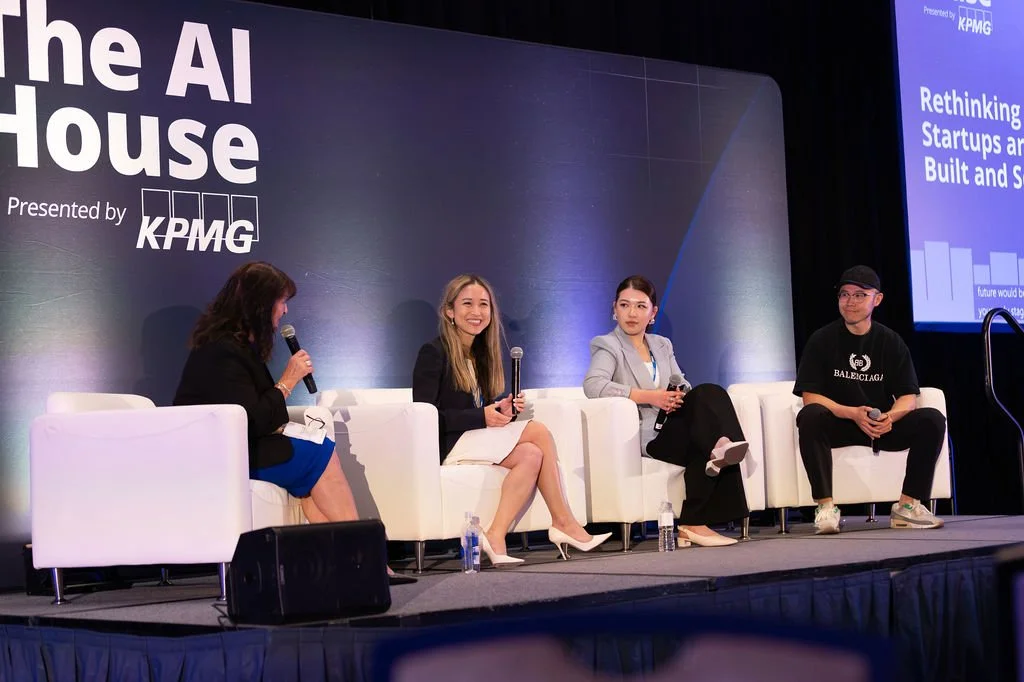
At Modev’s AI House event at the Venetian Hotel in Las Vegas, our own Elizabeth Shea moderated a discussion with a panel of investors:
Momei Qu, Managing Director at PSP Partners, a firm targeting earlier-stage, high-growth B2B software technology companies
Jane Yip, Co-founder of Zenith Venture Studio, which co-creates AI startups from the ground up, and the Implementation Strategist at BVRE Consulting & Advisory, a strategic advisory firm for real estate platforms navigating capital
Ryan Wang, General Partner at Solaris Venture Partners, which targets Seed through Series B+ opportunities in Robotics and Digital Infrastructure
These investors represent various stages of the investment lifecycle, but their message was remarkably consistent:
The AI opportunity has matured. The winners won't be the companies with the flashiest demos. They'll be the companies solving expensive business problems.
AI Is Moving from Possibility to Practicality
The first wave of AI investment focused on infrastructure: models, chips, cloud capacity, and computing power. The next wave is about application.
Investors are now asking questions like:
Does this technology solve a real operational pain point?
Will customers actually pay for it?
Can it reduce costs or increase capacity in measurable ways?
Is there a clear return on investment?
The companies attracting capital today aren't simply adding AI features or token maxing. They're redesigning workflows for real, not perceived, impact.
Investors Are Chasing Boring Problems
Momei Qu emphasized that some of the most valuable investments sound...well...boring. They might involve:
Invoice reconciliation
Supply chain documentation
Compliance training
Financial underwriting
Why?
Because those processes represent enormous labor costs, repetitive work, and measurable inefficiencies. AI can automate them, removing friction and often yielding immediate financial impact.
Domain Expertise Is Becoming the New Competitive Advantage
Perhaps the strongest message of the afternoon was this:
Technological prowess alone is no longer enough.
Jane Yip emphasized that it’s no longer about building products fast, but about relationships, domain expertise, and building trust within your industry. AI capabilities are becoming easier to build. It’s industry-specific, proprietary insight and experience that are so difficult to replicate.
Adoption Is Still the Hard Part
One challenge surfaced repeatedly throughout the conversation. Executives are enthusiastic about AI. Employees are sometimes overwhelmed by it.
Many organizations have ambitious AI strategies, but they struggle with implementation because teams don't have time between deals or projects to redesign daily workflows.
Jane Yip underscores that companies seeing the greatest success aren't rolling out AI from the top down. They're working from the bottom up alongside employees to improve outcomes and efficiency in day-to-day work. That human-centered approach is proving to be far more sustainable and effective than simply deploying the newest tool with a vague strategy behind it all.
To close out the panel, Elizabeth offered a rapid-fire question: in five years, what’s one thing that humans are still going to insist to do themselves? No matter how many “agent armies” may be deployed in the future, Ryan said, taking accountability and responsibility for the implications of a project will always be a human role.
What This Means for Companies Planning an Exit
At TreeFork Strategies, we help companies package themselves to enhance their enterprise value. This conversation at AI House aligned with something we continually reinforce to our clients:
Investors and acquirers don’t just buy technology. They buy confidence in proven ROI and future potential.
They want to see confidence that:
A company understands its market
Customers depend on its solution and keep coming back for more
Growth can continue after acquisition
AI can absolutely contribute to enterprise value, but simply adopting it isn’t a value-creation strategy. What matters is your ability to prove that it strengthens the underlying business: improving economics, creating competitive differentiation, deepening customer relationships, or opening new avenues for growth.
For companies building toward an investment, acquisition, or other major inflection point, the question shouldn’t simply be: "How are we using AI?"
It should be: "Where can AI strengthen our competitive advantage and create measurable business value?"
That’s exactly what our good friend David Tobin emphasized when we hosted him on Branching Out a few months ago. That’s the story that buyers and investors will lean in for. And communicating it clearly – well before a transaction is on the table – is how you build stronger, more attractive businesses.
Written by: